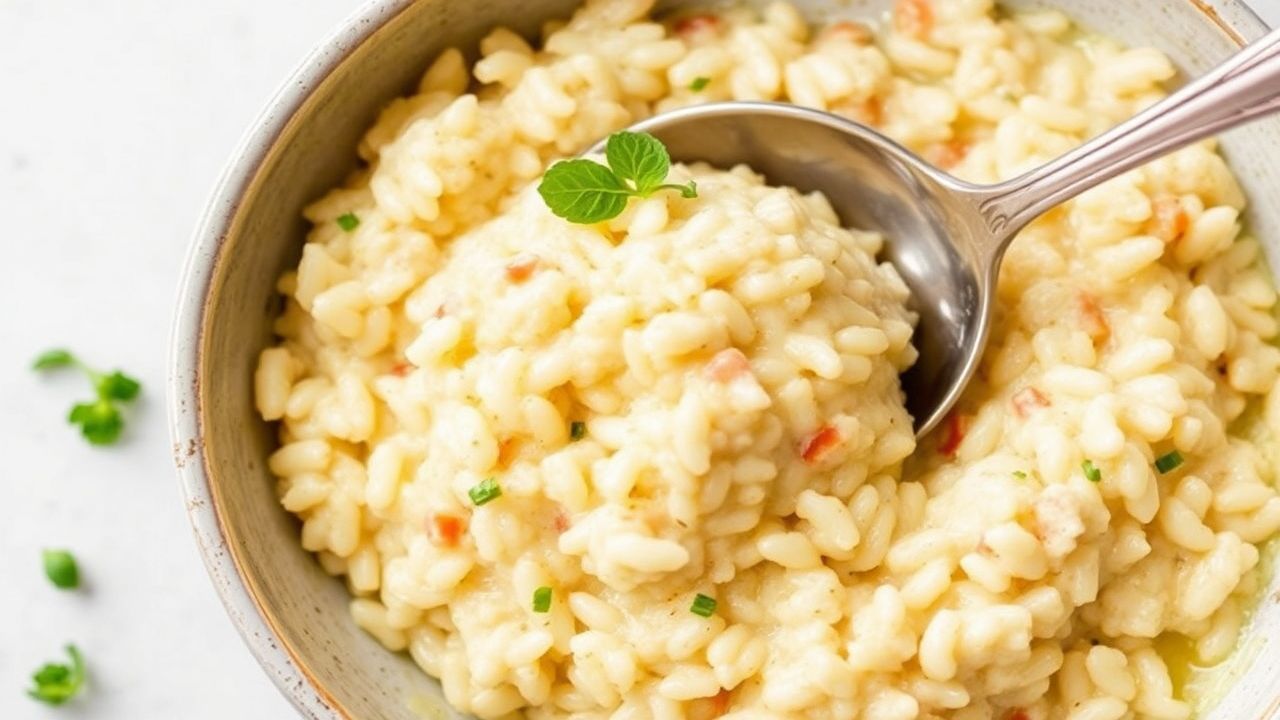

Imagine spooning through a creamy risotto and finding it gluey or, worse, hard in the center. Those outcomes come from small, correctable technique errors. This guide explains why risotto turns gummy or crunchy and gives precise fixes you can apply at the stove.
- Key takeaway: Use short-grain starchy rice and warm stock for predictable texture.
- Key takeaway: Add liquid slowly and stir gently to coax the right starch release.
- Key takeaway: Rescue options include steaming off-heat or loosening with hot stock or cheese.
- Key takeaway: Taste frequently; modern timing ranges depend on rice variety and pan heat.
Why Risotto Goes Gummy or Crunchy
Risotto texture depends on starch extraction and grain integrity. When grains break down too much, they release excessive starch and the dish becomes gummy; when grains stay hard, the result is crunchy and undercooked.
Temperature and rice variety drive that balance. Short-grain varieties are engineered to release amylopectin, so choose appropriate rice and keep stock hot to avoid abrupt temperature drops that interrupt cooking. See risotto for background on the dish.
Prep and Cook Time
- Preparation: 10 minutes
- Cooking: 25–30 minutes
- Total Time: 35–40 minutes
Timings are estimates because rice varieties and stove output vary. Treat the listed minutes as a guideline; plan to taste and adjust.
Keeping broth warm shortens the margin for error and speeds consistent starch release, which affects final texture.
Yield
- Serves: 4 generous portions
Portion sizes change with whether risotto is a main or a side. This yield assumes risotto as a principal dish with protein or vegetables added.
Leftovers concentrate starch; reheat with hot broth to restore a loose, creamy finish rather than microwaving straight from the fridge.
Difficulty Level
- Medium – Requires attentive stirring and timing
The technique centers on controlled agitation and steady heat, not speed. With practice, the steps become routine and repeatable.
Expect a learning curve: your first few attempts will help you calibrate pan size, heat output, and ladle rhythm for consistent texture.
Ingredients
- 1 ½ cups Arborio rice, rinsed but not soaked
- 5 cups low-sodium chicken or vegetable broth, kept warm
- 3 tablespoons unsalted butter, divided
- 2 tablespoons olive oil
- 1 small yellow onion, finely diced
- 2 cloves garlic, minced
- ½ cup dry white wine (optional)
- ¾ cup freshly grated Parmesan
- Salt and freshly ground black pepper, to taste
- Fresh parsley or thyme, for garnish
Short-grain rice varieties are essential. For more on rice categories and traits, review the Arborio rice entry and related short-grain varieties.
Parmigiano-Reggiano improves mouthfeel and helps loosen a slightly gummy risotto when added off the heat. You can read about its characteristics at Parmigiano-Reggiano.
Instructions
- Warm your broth in a saucepan over low heat. Keep it hot but not boiling.
- In a heavy-bottomed pan, heat oil and 1 tablespoon butter over medium heat. Add diced onion and sauté until translucent, about 5 minutes.
- Add garlic and cook for 30–60 seconds until fragrant.
- Stir in the rice and toast 2–3 minutes so the grains get coated and the edges become slightly translucent but the core stays opaque.
- Deglaze with wine if using, and let most of it evaporate while stirring.
- Add warm broth, one ladle at a time, stirring gently. Wait until most liquid is absorbed before adding the next ladle. Maintain a simmer, not a hard boil.
- Continue for 18–20 minutes, tasting around 15 minutes. Aim for tender grains with a slight bite, not hard centers or a mushy paste.
- Remove from heat and finish with butter and cheese to emulsify the sauce and make the risotto glossy. Season to taste.
- Let it rest for 1–2 minutes covered, then serve immediately.
Stirring frequency does not mean continuous frantic agitation. Use gentle, frequent stirs to coax starch without shattering grains.
Starch behavior explains the need for this rhythm. Learn more about starch science at starch, which clarifies why temperature and agitation matter.
Key Technique Notes
Temperature consistency is critical. Adding cold liquid drops the pan temperature and slows starch release, increasing the chance of crunchy cores.
Use a heavy pan to reduce hot spots. A thin pan gives uneven heat and inconsistent absorption.
Rescue Techniques
If your risotto is gummy, spread it on a warm baking tray to cool briefly, then return to a pan and loosen with a splash of hot stock while stirring gently. The hot stock restores movement without overcooking.
If it is undercooked and crunchy, add a few ladles of hot stock, cover, and let it steam off the heat for 2–4 minutes. Taste and repeat until tender.
After applying rescue steps, finish by stirring in cold butter and grated cheese off the heat. The fat re-emulsifies the starches and softens the texture visually and on the palate.
Tips for Success
Use the right rice: Arborio, Carnaroli or Vialone Nano perform differently; learn timings for each. Avoid long-grain varieties that stay separate and never cream.
Keep stock hot: Warm stock avoids temperature shocks. For more on prepared liquid and its role in cooking, review stock.
- Temperature matters: Add warm broth consistently to maintain a simmer.
- Patience pays: Add broth slowly; rushing causes uneven starch release.
- Stir gently: Too much force can shatter grains; too little leaves them undercooked.
Practice creates instinct for doneness. Keep notes about pan size, heat setting and rice brand to reproduce success each time.
Taste often during the critical 12–18 minute window to catch the exact point where the grain is tender but still has a slight core.
Serving Suggestions
Serve risotto in warm, shallow bowls to preserve heat and show its sheen. Finish with fresh herbs and a shaving of aged cheese for contrast and aroma.
Pair with a crisp white wine or a lean protein to balance richness. A small drizzle of high-quality oil can add aromatic lift without altering texture.
| Nutrient | Per Serving |
|---|---|
| Calories | 370 kcal |
| Protein | 10 g |
| Carbs | 55 g |
| Fat | 9 g |
FAQ
Why did my risotto end up gummy instead of creamy?
Gummy risotto often indicates over-stirring or overcooking that breaks grains apart. Excessive liquid or the wrong rice adds to the problem.
Fix it by loosening with hot stock and finishing off-heat with a knob of cold butter and grated cheese to re-emulsify the sauce.
What causes crunchy or undercooked grains?
Crunchy grains usually mean undercooking or cold liquid additions that halted starch release. Uneven heat can also leave hard cores despite a creamy surface.
Rescue by adding very hot stock, covering briefly off the heat, and testing frequently until the grains soften.
Can I use regular long-grain rice for risotto?
Long-grain rice lacks the short-grain starch profile needed to make risotto creamy. It will remain separate and not produce the desired texture.
Use short-grain varieties and adjust your technique to the rice you choose for consistent results.
Does wine choice affect texture?
Wine influences flavor more than texture. Use a dry white for brightness but allow most alcohol to evaporate so it doesn’t cool the pan.
If you skip wine, replace it with an equal volume of warm stock and adjust seasoning to taste.
How should I reheat leftover risotto?
Reheat gently in a pan with hot stock or water, stirring until loosened. Avoid dry reheating methods that concentrate starch and thicken the dish into a paste.
Reheating slowly and adding liquid restores the loose, creamy mouthfeel of freshly made risotto.
See also: risotto texture