
There is a timeless pleasure in a well-roasted leg of lamb: tender meat, concentrated savory flavor, and a crust perfumed with herbs. When you match that roast with complementary sides and sauces, the meal becomes balanced, layered, and clearly intentional.
- Why pairings matter
- Prep and Cook Time
- Yield
- Difficulty Level
- Ingredients
- Equipment and tools
- Step-by-step roasting
- Sauces and finishing touches
- Suggested side dishes
- Plating and presentation
- Tips for Success
- Serving suggestions and wine pairing
- Nutritional snapshot
- Further reading and internal resources
- FAQ
- How long should I marinate a leg of lamb?
- What internal temperature is best for leg of lamb?
- Which side dishes cut through lamb’s richness best?
- Can I prepare sides ahead of time?
- Where can I learn more about herbs and pairings?
- Final Thoughts
- Pair bold sides with rich lamb to balance fat and flavor.
- Use fresh herbs like rosemary and mint to lift gaminess.
- Choose one bright element — a salad, sauce, or citrus — to cut richness.
- Plan starches that absorb juices: mashed potatoes, polenta, or couscous.
Why pairings matter
Leg of lamb delivers concentrated flavor and a fatty mouthfeel that rewards thoughtful accompaniments. Proper pairings temper the richness while enhancing the roast’s herbal notes.
For technical context, lamb and mutton vary by age and flavor intensity, which affects pairing choices; see lamb and mutton for background. Consequently, choose sides and sauces that harmonize with the specific cut and cooking level.
Prep and Cook Time
Preparation: 20 minutes; allow additional time for scoring and assembly of herb paste. Proper mise en place speeds the cooking process and avoids last-minute substitutions that dilute flavor.
Marinating: Minimum 4 hours; overnight preferred for depth of flavor. Acid in the marinade (lemon or vinegar) tenderizes while herbs infuse aromatic oils into the meat.
Yield
Serves 6 to 8 depending on bone-in weight and side choices. Plan 6 to 8 ounces of cooked lamb per adult when you include hearty sides and salads.
For entertaining, allow one extra pound per two guests to cover seconds and hungry appetites. Also, reserve pan juices for a jus—these add value and flavor to leftovers.
Difficulty Level
Medium: accessible to cooks who understand roast temperatures and resting times. The method relies on an instant-read thermometer and basic oven control, not on advanced butcher skills.
If you want guided technique, review roasting fundamentals such as heat management and carryover cooking at roasting (cooking). These principles will prevent overcooking and preserve juiciness.
Ingredients
Core roast ingredients: 4–5 lb bone-in leg of lamb, extra-virgin olive oil, fresh rosemary, thyme, garlic, lemon zest, Dijon mustard, kosher salt, and freshly ground black pepper. These items create a classic herb crust and a savory baseline.
Complementary salad and garnish items: baby arugula, cherry tomatoes, cucumber, fresh mint, and optional crumbled feta. For starch, prepare mashed potatoes, creamy polenta, or herb couscous to absorb pan juices.
Equipment and tools
Use a sharp chef’s knife to score fat, a roasting rack to lift the leg, and an instant-read thermometer for precise doneness. Proper equipment shortens the learning curve and improves consistency.
Also have a heavy roasting pan to collect drippings for a reduction sauce. A fine-mesh strainer helps clarify jus when you make a red wine reduction or pan sauce.
Step-by-step roasting
Marinade and seasoning
Whisk olive oil with minced garlic, chopped rosemary and thyme, lemon zest, Dijon, salt and pepper. Rub this paste into scored fat and sides, pressing herbs into the membrane for direct flavor contact.
Seal and refrigerate for at least 4 hours or overnight for strongest infusion. Bring to room temperature 30 minutes before roasting so the center cooks evenly and predictably.
Roasting and resting
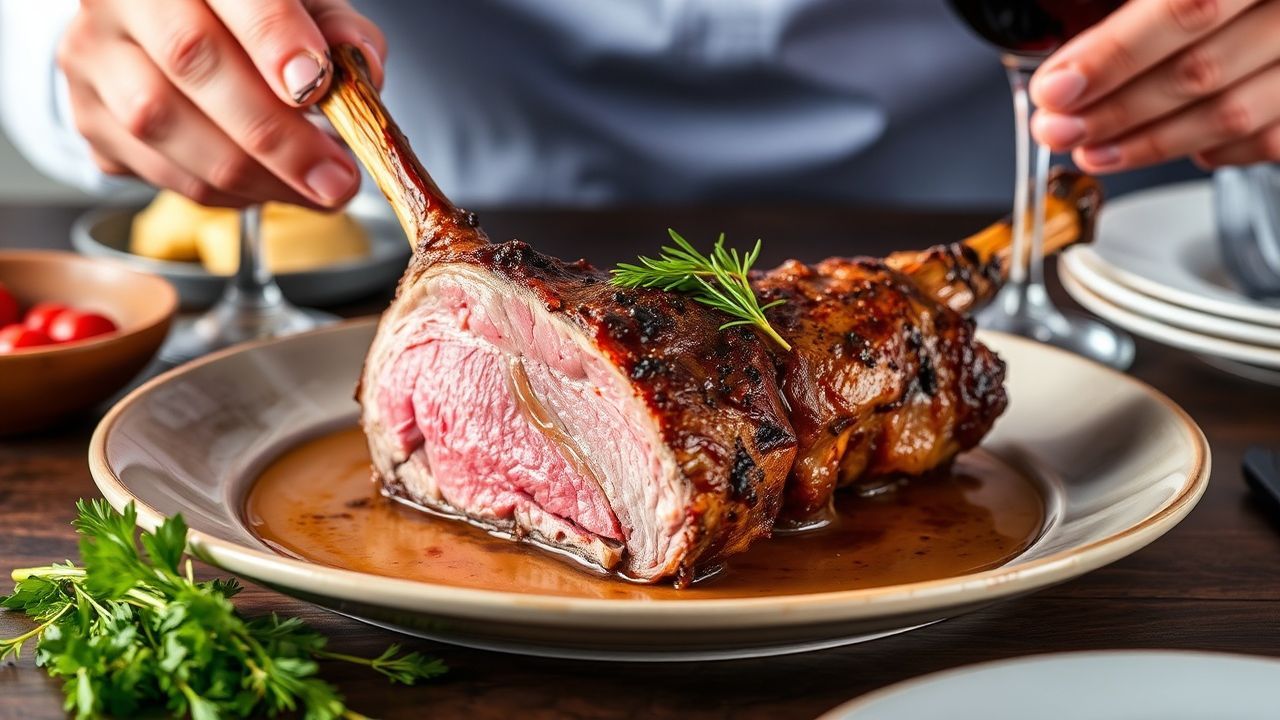
Preheat oven to 375°F (190°C). Place the leg fat-side up on a rack and roast until the thermometer reads 135°F (57°C) for medium-rare; expect about 1 hour 30 minutes for a 4–5 lb bone-in roast.
Remove and tent with foil; rest 15–20 minutes to allow carryover cooking and juice redistribution. This step yields uniform color and maximum tenderness when you slice against the grain.
Sauces and finishing touches
A classic red wine reduction made from pan deglaze, minced shallot, fresh rosemary, and wine concentrates lamb flavors and adds gloss. Reduce to a nappe consistency so the sauce clings to slices without pooling excessively.
For freshness, serve a minted yogurt or mint chimichurri alongside; acid and coolness cut through fat. Fresh mint links to traditional Mediterranean profiles—read more about mint varieties and uses if you want to experiment.
Suggested side dishes
Roasted root vegetables (carrots, parsnips, and beets) mirror lamb’s earthiness and caramelize under high heat for savory-sweet contrast. Season roots with olive oil, salt, pepper, and a sprig of rosemary for cohesion.
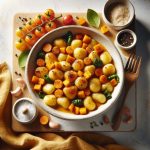
For a grain-based starch, choose herbed couscous tossed with lemon zest and parsley or creamy polenta enriched with butter and Parmesan. Learn more about couscous structure at couscous, which pairs well with braised juices.
Plating and presentation
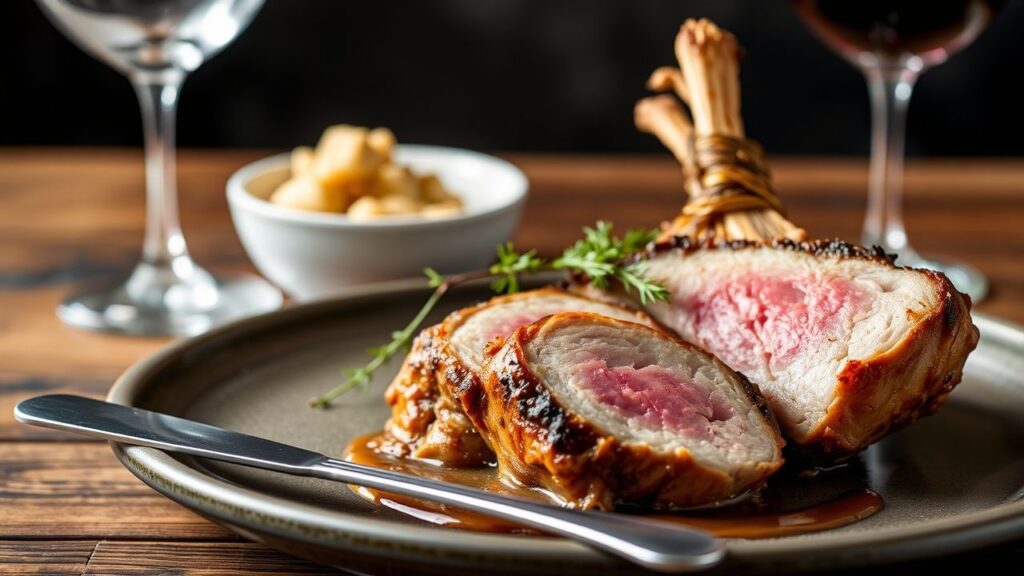
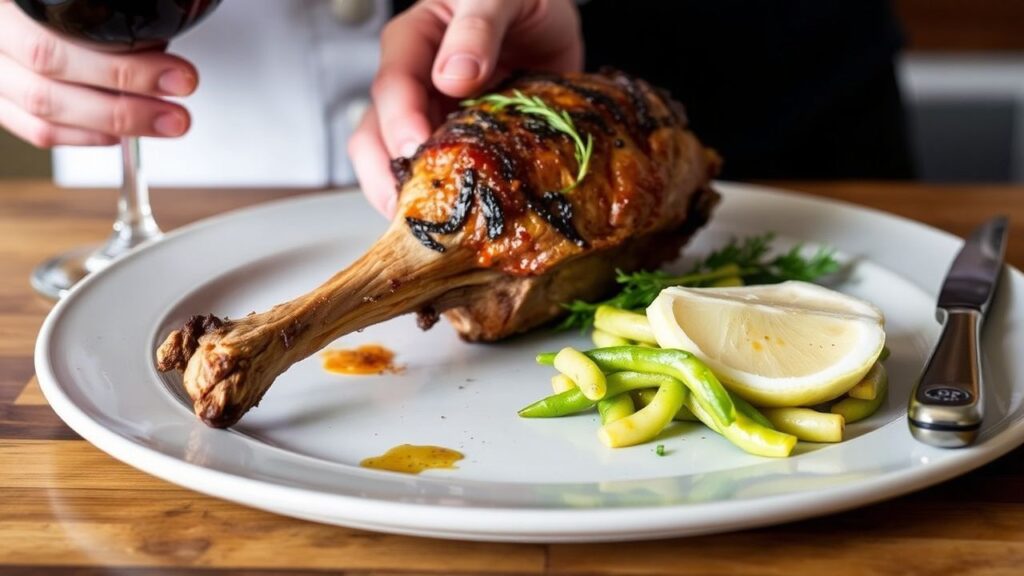
Slice the rested leg against the grain into even pieces and arrange on a warm platter. Add color with scattered herbs and a spoonful of reduction to create contrast and sheen.
Include a crunchy element such as toasted almonds or charred broccolini for textural interest. Also, present warm crusty bread so guests can mop up juices and experience layered flavors.
Tips for Success
Use an instant-read thermometer to hit precise doneness; lamb benefits from controlled carryover cooking. Aim for internal temps: 125–130°F for rare, 135°F for medium-rare, 145°F for medium.
Allow ample resting time and avoid slicing immediately to preserve juices. Additionally, baste selectively only if the pan is not dry; extended basting can drive heat into the meat unevenly.
Balance richness with acidity: a splash of lemon in the salad dressing or a tablespoon of vinegar in a pan sauce brightens the entire plate. Also, choose one bold element per plate so flavors stay defined rather than muddled.
Serving suggestions and wine pairing
Serve bold red wines—Syrah/Shiraz, Cabernet Sauvignon, or a structured Bordeaux-style blend—to match lamb’s fat and savory tone. Tannins in these wines bind with protein and fat, enhancing perceived dryness and fruit intensity.
For non-alcoholic options, provide a rosemary-infused lemonade or sparkling pomegranate to add acidity and effervescence. These choices refresh the palate between bites and support layered side flavors.
Nutritional snapshot
The following values are approximate and depend on trimming and portion size. A standard serving of seasoned leg of lamb with modest sides contains concentrated protein and moderate fat from the meat and olive oil.
| Nutrient | Per Serving (Approx.) |
|---|---|
| Calories | 480 kcal |
| Protein | 42 g |
| Carbohydrates | 8 g |
| Fat | 28 g |
Further reading and internal resources
Explore additional side dish ideas on our internal collection: sides for lamb recipes. These proposals focus on texture and acid to complement lamb’s profile.
For seasoning technique tips, consult our guide at seasoning techniques, which covers herb blends, salting schedules, and finish sauces. These resources build repeatable results for roasts and other large cuts.
FAQ
How long should I marinate a leg of lamb?
Marinate for at least four hours; overnight yields the most infused flavor without compromising texture. Acidic components should remain moderate to avoid excessively softening surface proteins.
What internal temperature is best for leg of lamb?
Remove at about 135°F (57°C) for medium-rare; resting will raise it a few degrees to the target. Use an instant-read thermometer inserted into the thickest part, avoiding bone contact for accuracy.
Which side dishes cut through lamb’s richness best?
Bright salads with citrus or vinegar-based dressings, minted yogurt sauces, and roasted root vegetables with acid components work well. Also, grain sides like couscous or herbed polenta absorb juices and add structure to the plate.
Can I prepare sides ahead of time?
Yes. Roast vegetables can be reheated and dressed at service, while salads should be prepped but dressed just before serving to retain crunch. Sauces often taste better after a day as flavors marry, so make reductions in advance and rewarm gently.
Where can I learn more about herbs and pairings?
Review profiles for common herbs such as rosemary and consult culinary herb references to match aromatics with lamb. Also consider wine pairing fundamentals via the red wine entry for varietal characteristics.
Final Thoughts
A successful leg of lamb dinner hinges on balance: the right herbs, one bright element, and starches that capture juices. When you plan sides to complement the roast’s fat and herbal notes, each bite feels deliberate and complete.
Practice the roast once, refine your timing, and you will reliably produce a centerpiece that pleases guests and rewards simple accompaniments. Keep experimenting with small variations—different herbs, one new sauce—and build a personal repertoire of pairings.
See also: lamb